
 |
| Herb Garden at the Abbey House, Malmesbury |
The Yorkshire Post reports that a new monastic garden is being created on the St. Ives Estate near Bradford in Yorkshire. The estate, which is under the control of Bradford Metropolitan District Council, has a long an illustrious history. From the 12th Century until to the dissolution of the monasteries, the
main area of the Estate was part of the properties belonging to the Monks of Rievaux. The land passed through two families - the Laycocks and the Milners - before coming into the ownership of the Ferrands in 1635, who continued ownership until the 20th century.
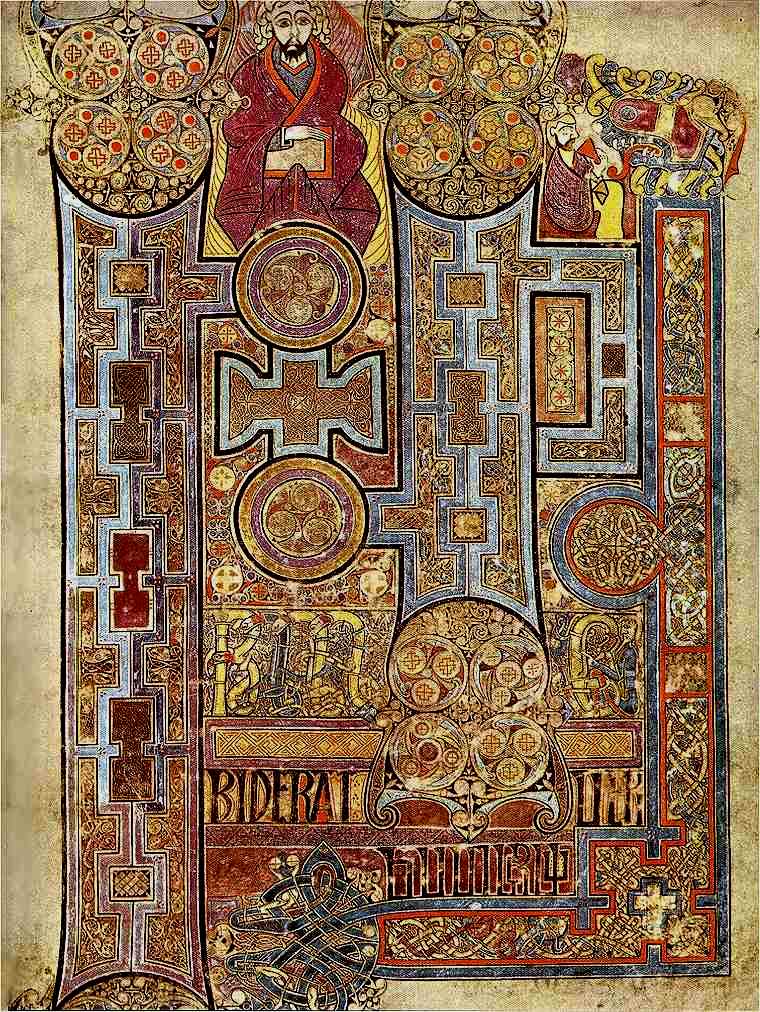 |
| The Book of Kells - now in Trinity College, Dublin |
As part of a £250,000 restoration programme for the St Ives Estate, Jane Ramsden has set about recreating a monastic garden close to the site of the 13th century monastery. For her inspiration Jane has drawn on the 9th century Book of Kells and the 10th century Leechbook of Bald.
Two additional manuscripts contemporary with Bald are the Lacnunga, another 'healing book', and Ælfric's Glossary. And were it me devising the planting list for a garden to go with an English 13th century monastery, I would also consult the first specifically horticultural texts written in England: Alexander Neckam's De Naturis Rerum (c.1180) and Laudibus Divinae Sapientiae (1213), from which a list of 140 species can be compiled.
Two additional manuscripts contemporary with Bald are the Lacnunga, another 'healing book', and Ælfric's Glossary. And were it me devising the planting list for a garden to go with an English 13th century monastery, I would also consult the first specifically horticultural texts written in England: Alexander Neckam's De Naturis Rerum (c.1180) and Laudibus Divinae Sapientiae (1213), from which a list of 140 species can be compiled.
See also my previous post on Mediæval Gardens.

