Take a break and enjoy this video lecture discussing the United State's third President in a role he seems to have considered as important as leading a new nation. That of vegetable gardener on his Monticello estate.
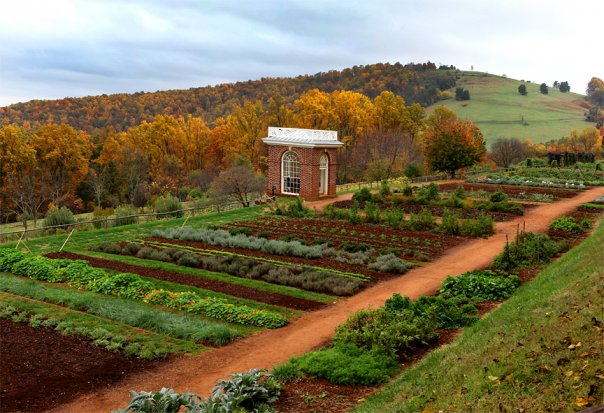
To quote the Cornell University website: 'Thomas Jefferson wrote that "the greatest service which can be rendered any country is to add a useful plant to its culture," and his 1,000-foot-long, terraced vegetable garden at Monticello was an experimental laboratory, an Ellis Island of 330 varieties of vegetables.
Jefferson himself was a seedy missionary of new and unusual novelties, and his legacy in food, wine, and gardening provides us today with a profound model in vegetable cuisine, sustainable horticulture, and a passion for the earth.
This was Jefferson's personal garden, but it was also a family garden where he sowed cabbage seed with his daughter, Martha; a community garden where Jefferson competed in friendly "pea competitions" with his neighbors; a national garden of seeds from the Lewis and Clark expedition, the Spanish southwest, and America's finest plantsmen; and an international garden of vegetables from around the globe.
Thomas Jefferson liked to eat vegetables, which "constitute my principal diet," and his role in linking the garden with the kitchen into a cuisine defined as "half French, half Virginian" was a pioneering concept in the history of American food.
Peter Hatch examines a full sample of Jefferson's favorite vegetables, from salsify to peas, by discussing both how they were grown and prepared at Monticello but also their history and place in the horticultural world of early nineteenth-century Virginia. Finally, Hatch explores the precedent-setting vegetable garden restoration of the early 1980's and the compelling Jefferson legacy in food and gardening today.’
The lecture was part of the 2012 Cornell Plantations Lecture Series.
Jefferson himself was a seedy missionary of new and unusual novelties, and his legacy in food, wine, and gardening provides us today with a profound model in vegetable cuisine, sustainable horticulture, and a passion for the earth.
This was Jefferson's personal garden, but it was also a family garden where he sowed cabbage seed with his daughter, Martha; a community garden where Jefferson competed in friendly "pea competitions" with his neighbors; a national garden of seeds from the Lewis and Clark expedition, the Spanish southwest, and America's finest plantsmen; and an international garden of vegetables from around the globe.
Thomas Jefferson liked to eat vegetables, which "constitute my principal diet," and his role in linking the garden with the kitchen into a cuisine defined as "half French, half Virginian" was a pioneering concept in the history of American food.
Peter Hatch examines a full sample of Jefferson's favorite vegetables, from salsify to peas, by discussing both how they were grown and prepared at Monticello but also their history and place in the horticultural world of early nineteenth-century Virginia. Finally, Hatch explores the precedent-setting vegetable garden restoration of the early 1980's and the compelling Jefferson legacy in food and gardening today.’
The lecture was part of the 2012 Cornell Plantations Lecture Series.