Showing posts with label kew. Show all posts

Friday, 7 February 2014

Joseph Hooker Videos


Just to follow up on my last post concerning Sir Joseph Hooker and the fact Kew has made his correspondence available online, there are also some excellent movie clips about this remarkable man available online also.

Made by Jupe Productions and Peter Donaldson there are eight great short films to watch:


Enjoy!

The Joseph Hooker Correspondence Project


Another great result from Royal Botanic Garden, Kew where a team have been digitising and now make available online the Correspondence of Sir Joseph HookerHooker was true Victorian polymath who succeeded his father as the second Director of Kew, who was Charles Darwin's confidant, and who also plant hunted in Sikkim (and elsewhere).

This truly is a magnificent resource for garden and plant historians and botanists alike so do take a look at the website as it also has a whole lot more about the man and his work than just his letters.

There is even an article I wrote for Kew Magazine describing an expedition I made a few years back to north Sikkim to follow in Hooker's footsteps - a truly wonderful trip.  Scroll to the bottom of the page and there you can also download the article and read it at your leisure. 


Hooker had it on the nail when, in a letter to his father, he described the valley sides ablaze with Rhododendron flowers thus: 'The Mt sides here actually bloom white, scarlet, purple, pink, yellow no language can exaggerate their beauty.'

Thursday, 14 February 2013

Kew Directors' Correspondence


Today a big thank you to Virginia Mills of the Kew Directors' Correspondence Digitisation  project at Royal Botanic Garden, Kew who has kindly written the following and fascinating guest post...


The team and I are @kewdc on Twitter, it was through Twitter that we struck up a dialogue with @gardenhistory over a mutual interest in intrepid botanist/explorer David Douglas (more on him later). 

KewDC stands for Kew Directors' Correspondence and over here behind the scenes in the library at Kew Gardens the Directors' Correspondence team is busy digitising letters from the gardens' archive. We scan the letters using a high resolution digital camera and also summarise their content pulling out important information about plants, gardens, places and botanists past, to create a description of each letter's content. This 'metadata' is uploaded alongside the images to a fabulous website called Jstor plant science  - a huge repository of plant based information, with many international contributors besides Kew, combining  digitised historical documents, plant  specimens and drawings, as well as published works. 

One of my fellow digitisers imaging a letter
So that's what we get up to during our working week but what exactly is the material we are putting out there? The Directors' Correspondence, one of the largest collections within Kew's official archive, is a unique resource, containing firsthand accounts and observations on botany, botanic gardens, ethnobotany, natural history, history, science and politics. The 218 volume collection contains the scientific correspondence received by Kew's Directors and senior staff from the 1840s to 1928, as well as correspondence received by Sir William Jackson Hooker prior to 1841. The collection highlights the important role played by RBG Kew in furthering 19th and early 20th Century botanical investigation and also its significance to the growth and development of the British Empire.

Kew was instrumental in helping the British Empire make the most of the natural plant resources in its vast territories and this was done through a network of gardeners, botanic gardens, experimental gardens and nurseries across the world all corresponding with the Directors at RBG, Kew. So the DC represents not just a history of Kew as a garden but of botanic gardens throughout the world: of their origin, development and day to day running. For example the collection includes over 500 letters from Calcutta Botanic Garden

The collection also represents the history of what we have in our back gardens today. Horticulture was big business in the 18th and 19th century. As the proliferation of shows and exhibitions of goods from around the empire fuelled the desire for all things new and exotic, plant hunters were sent out by nurseries, by the Royal Horticultural Society and by RBG Kew to find new interesting and ornamental plants. The DC includes letters from some of the great Victorian explorers and botanists who introduced many of today's common British garden plants, some of whom are remembered in the names of the plants they collected. 

But not all the people who can take credit for these introductions were actually employed as plant hunters and most are not well known or remembered. A favourite 'amateur collector' of mine represented in the DC is Augustine Henry who collected in China and Taiwan; he was not a trained botanist and plant hunting wasn't his job, he was posted in the orient as a customs officer. His letters are fascinating accounts of remote regions and fields of botany, which have now been lost to progress, but provided rich pickings for Henry at the end of the 19th Century. He sent over 15,000 dried plant specimens to Kew, material which included 25 new genera and 500 new species, many of which were suited to the climate of the British garden and his success prompted other sponsored collectors to be sent to China. In 1935 J.W. Besant wrote: 'The wealth of beautiful trees and flowering shrubs which adorn gardens in all temperate parts of the world today is due in a great measure to the pioneer work of the late Professor Henry'. See the letters on Jstor here.

The beautiful Lilium henryi, collected by Henry and named after him, appeared in the 1891 Curtis Botanical Magazine and is still a garden favourite
The professional side of plant hunting is represented in the collection by the likes of David Douglas who was sent by the Royal Horticultural Society to gather plants in the Pacific Northwest in 1824. Douglas is immortalised in the common name of the tree many of us bring in to our houses once a year – the Douglas-fir, which he introduced into cultivation in 1827.  Whilst collecting in 1832 Douglas wrote to Kew that: "you will begin to think shortly I manufacture pines" [DC61 f.106].  Indeed his other notable introductions include the Ponderosa Pine, Lodgepole Pine, Western White Pine, Monterey Pine and the Sugar Pine. His life as a collector in North America reads like a 'Boy's Own' adventure – from meetings with native American Indians and fur traders to taming eagles and surviving canoe capsizes. The DC reveals his adventures first hand and with a real personal note. You can read his amusement, for example, when he describes how rival collector Archibald Menzies was known to the Native Americans as "the red faced man who cut the limb of man off and gathered grass" [DC61 f.112]. Conversely, feel his despair when he writes about  his canoe being wrecked "I cannot detail the labour and anxiety this occasioned in both body and mind to say nothing of the hardship I endured" and encountering a frontier town decimated by a terrible fever: "not a soul remains!! Houses empty and the flocks of famished dogs howling and dead bodies in every direction" [DC61 f.112].

It seems there was scarcely a botanical letter written in the late 1830's that does not lament Douglas's grizzly death: gored by a bull when he fell into a cattle trap whilst collecting in Hawaii. And then because the 19th century botanist is a gossiping creature in my experience, there comes the epistolary discussion: did he fall or was he pushed?

The DC team scan and read every single letter, particularly difficult when they are cross-written like this one from David Douglas. Here Douglas writes about how dangerous it was when collecting in North California "my rifle is always in my hand night and day. It lays by [my] side under my blanket and my little faithful scotch terrier, the companion of all journeys, at my feet". [DC61 f.96]
David Douglas's letters are part of the North America section of the DC: the latest part of the collection being digitised.  This content will go live soon, in the mean time Jstor is replete with the letters from Africa, Latin America and Asia, so go explore!

For more of our favourite stories from the DC check out the Kew Library, Art and Archive blog.  And if you have any questions or want more info, email us or contact us through Twitter.

NB from Toby: There is also a whole chapter on Douglas in the Kindle edition of The Plant Hunters.  

Monday, 17 September 2012

A Rare Flowering of Emmenopterys henryi

Emmenopterys henryi from the Cambridge Library Collection Blog
One of the many plants introduced by the plant hunter Ernest Wilson (who recently featured in this post) was the snappily-named Emmenopterys henryi. The species is named for Augustine Henry who discovered but did not introduce the tree.  Henry, an Irishman who was employed by The Imperial Chinese Customs Service as an Assistant Medical Officer was sent to Yunnan to study medicinal plants, where he also made a huger herbarium collection which is now at RBG, Kew.

Ernest Wilson
Arriving in Britain in 1907 at a time when Wilson was in the employ of the Veitch nursery, the tree which Wilson described as ‘one of the most strikingly beautiful...of the Chinese forests’ does not flower often. In fact, the specimen currently in bloom in the Cambridge University Botanic Garden is only the fifth to have flowered in Britain.  So if you are in the vicinity, take the once-in-a-generation opportunity to see a rare beauty.

Thursday, 30 August 2012

A Lost Garden in Jersey - and Samuel Curtis

Image from Samuel Curtis Garden Project

A post on the Garden History Society Forum tells that sadly the garden of Chateau la Chaire (now is Chateau La Chaire hotel and restaurant) is 'destined to remain lost since the failure to kick start the renaissance of this once sublime sub-tropical plants mans paradise at Rozel Bay, on the Sunshine Island of Jersey.'

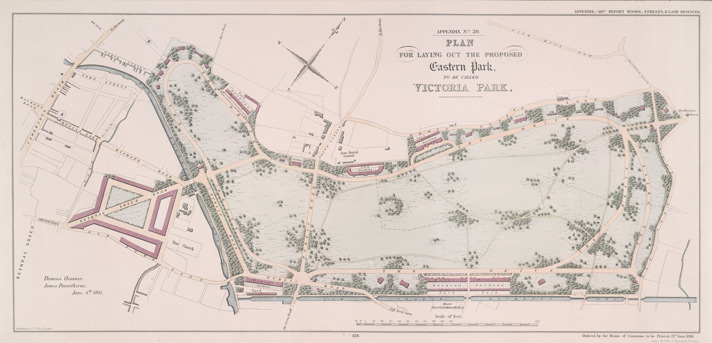
The garden was designed in from 1841 by the English nurseryman, publisher and botanist Samuel Curtis. Curtis who designed Victoria Park in Bethnal Green from 1845.  The park is being used as part of the 2012 London Olympics to host BT London Live Victoria Park.

1845 Plan for Victoria Park
Curtis eventually moved into the chateau in 1852There is a goodly correspond between Curtis and  Sir William Hooker (who was Director) at Kew, and  Outbooks reveal that Curtis received many new, exotic and slightly tender plants which had arrived at Kew through the endeavours of the plant hunters and which Kew dispatched in order to trial them in Curtis's new garden.  There is more about the garden and hoped-for restoration at the Samuel Curtis Garden Project.

You may also recognise Samuel's surname from Curtis's Botanical Magazine, which was founded by Samuel's first cousin and father-in-law, William Curtis in 1787.  Samuel  succeeded to the editorship of the magazine in 1927 selling his rights in 1846. Curtis's Botanical Magazine (1801-1920) is downloadable for free from our good friends at the Biodiversity Heritage Library.

Samuel died at la Chaire in 1860 - and surely there must be a philanthropist or two amongst Jersey's millionaires who would like to help restore Curtis's wonderful creation?
 

Wednesday, 15 February 2012

Love and the Plant Hunter

The Zemu Valley, Sikkim
A few years back I traveled in the footsteps of the plant hunter Sir Joseph Hooker, in search of 'his rhododendrons' in their native habitat of Sikkim.  Part of the safety kit was a satellite phone and a GPS, with the former also used for personal calls.  I remember the delight of being able to ring home from literally the middle of nowhere.  I also remember thinking how hard it must have been for those plant hunting pioneers - and their families at home - in the days when it took 6 months or more to receive a personal letter from home or to get one from the wilds. 

A recent discovery in the Royal Botanic Gardens, Kew, Library and Archives offers an insight into the poignancy of such letters from Sir Joseph Hooker to his second wife Hyacinth and from Frank Kingdon Ward to his second wife Jean.

Saturday, 31 December 2011

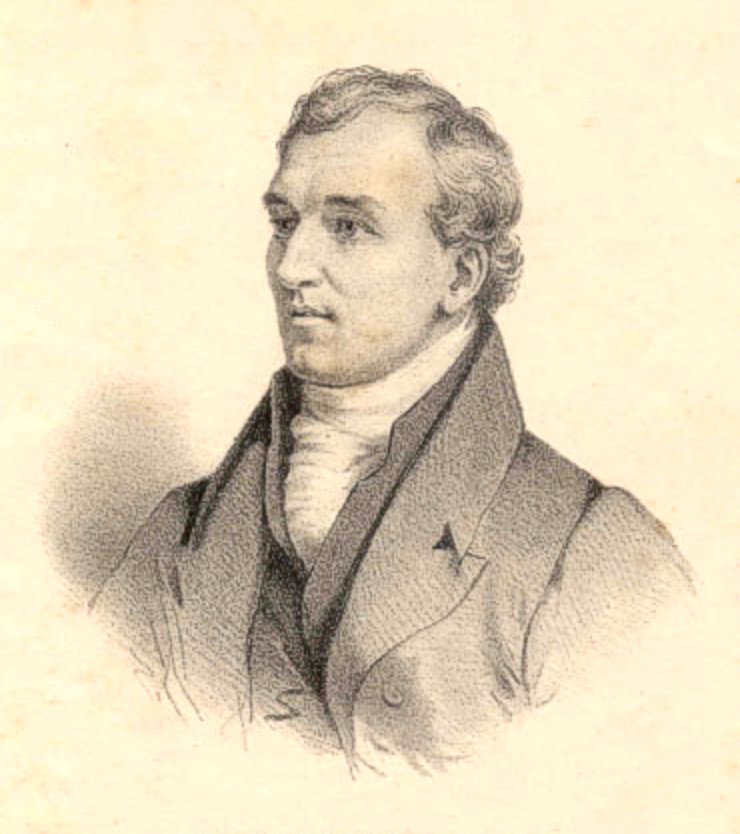
Sir Jospeh Hooker (1817-1911)

On this, the last day of 2011, I wanted to celebrate the greatest botanist of the 19th century, who died 100 years ago on 10 December 1911.
Sir Joseph Hooker in 1896.  The image is from Hookers own website.
Sir Joseph Dalton Hooker was the younger son of Sir William Jackson Hooker (1785-1865) the first official Director of Royal Botanic Garden, Kew.  While Joseph succeeded his father to the Directorship at Kew - his most notorious act was probably the ‘botanical piracy’ to obtain seeds of the rubber tree, Hevea brasiliensis.  Subsequently, natural rubber produced by plantations in British colonies in the Far East destroyed the Brazilian rubber industry - he also led an incredibly full and fascinating life.

There is insufficient space here to recount all Sir Joseph’s achievements - do visit his own website for many more details.  Suffice to say that he traveled with Capt. Ross his Antarctic expedition (1838-42) and in 1844 was the person first Charles Darwin told about the Theory he was working on.  As Darwin’s confident it was Hooker far more than Huxley who fought Darwin’s battles, for example arranging the reading of Darwin’s (and Alfred Russel Wallace’s) paper at the Linnean Society on 01 July 1858.  And a year later Hooker was the first scientist to publicly endorse Origin of Species in Introductory Essay to his Flora Tasmaniae.
The Zemu Valley, Sikkim
From the garden historian’s perspective Hooker is remembered primarily as a plant hunter.  Between 1847 and 1851 he became the first Westerner to explore the then-kingdom of  Sikkim in the eastern Himalaya.  The account of his adventures he published in the best-selling Himalayan Journals (1852).  It remains a fascinating read and may be downloaded free from Project Gutenberg.  
The landscape of Sikkim from Himalayan Journals
It was using this text that I followed in Hooker’s footsteps in what is now a state of India and a buffer military zone with Tibet.  Because of this the landscape Hooker saw remains relatively undamaged.  To the extent that I even found a fireplace of stones beneath a large rock under which he camped in the Zemu valley.
Rhododendron hodgsonii in Sikkim
Hooker’s most significant discovery was over 20 new species of colourful rhododendrons, which upon their introduction became a huge garden fashion - here you can download Hooker’s The rhododendrons of Sikkim-Himalaya (an original copy will set you back between £13,000 and £18,000).  In 1871 the garden writer Shirley Hibberd claimed the same amount of money had been spent on rhododendrons in the past 20 years as was the nation debt.  Then the figure of £738 million,  the equivalent of £51,200 million today!