
 |
| Claremont Landscape showing the Amphitheater |
Both the historic landscape gardens of Claremont (National Trust) and the Claremont Mansion (Claremont Fan Court School) are open this Sunday 8 September for 'Heritage Weekend'.
The history of the estate begins with Sir John Vanbrugh who in 1708 built himself a small house and began work on the gardens. In 1714 Vanbrugh sold the house to the wealthy Whig politician Thomas Pelham-Holles, Earl of Clare, who later became Duke of Newcastle and served twice as Prime Minister. The Earl commissioned Vanbrugh to add two great wings to the house and to build a fortress-like turret on an adjoining knoll. From this so-called 'prospect-house', or Belvedere, he and his guests could admire the views of the Surrey countryside as they took refreshments and played hazard, a popular dice game.
Work on the gardens began around 1715, and by 1727 they were described as ‘the noblest of any in Europe’. Within the grounds, overlooking the lake, is an unusual turfed amphitheatre. Today they are especially important as an early example of the English Landscape Garden and contain elements by the all the great landscapists - Charles Bridgeman,
William Kent and subsequently 'Capability' Brown.
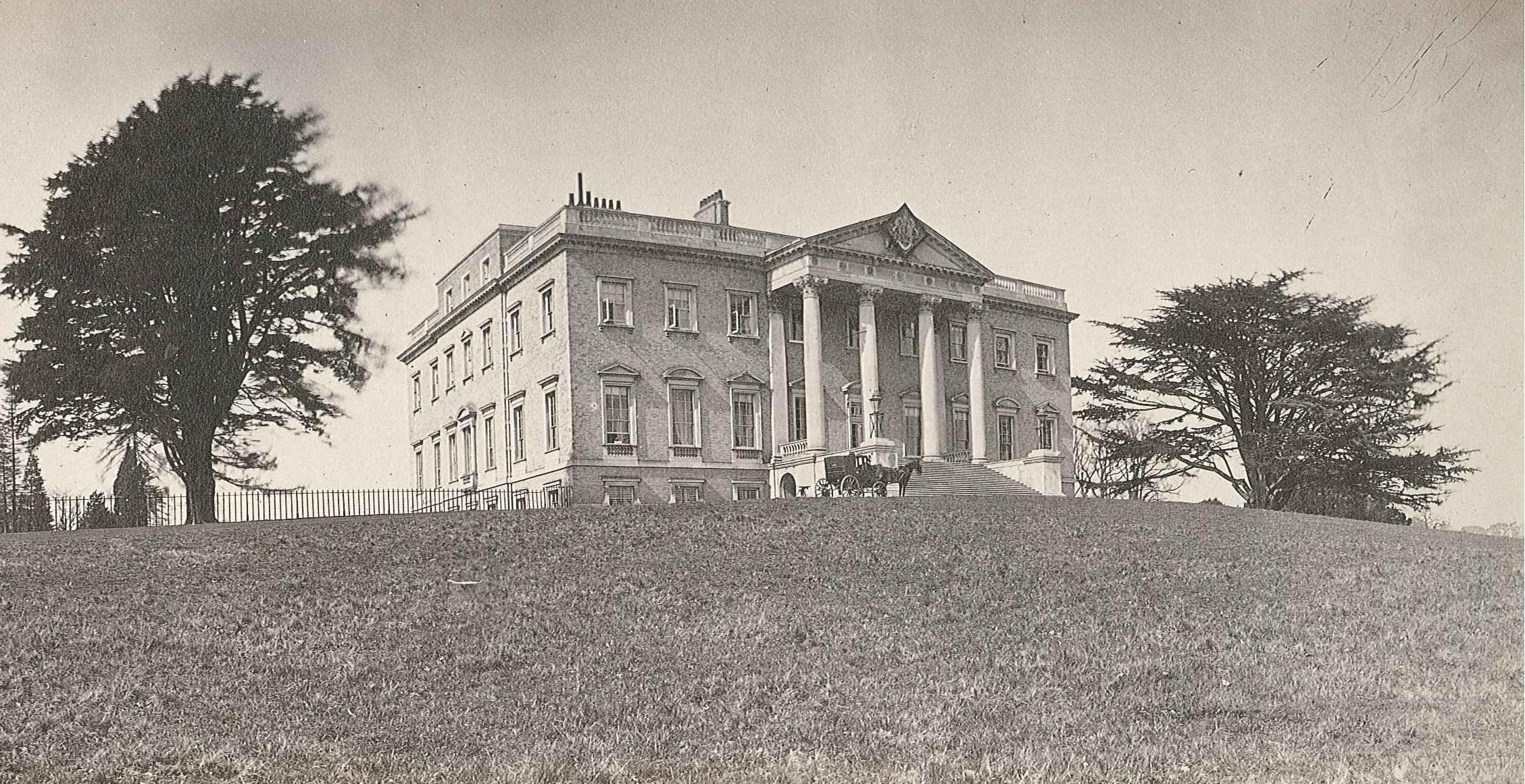 |
| Claremont Mansion in c.1860 |
In 1768 Newcastle's widow sold the estate to the super-wealth Robert Clive, Baron Clive of Plassy, who is is said spent £100,000 (about £10,400,000 today) on his new mansion and the grounds. Clive's Palladian mansion is an interesting example of 'Capability' Brown's work as an architect. Subsequently it was occupied by Princess Charlotte (daughter of George IV) upon her marriage to Leopold of Saxe-Coburg.
It was also favourite of the young Queen Victoria, who celebrated
many of her birthdays here. In the aftermath of the 1848 Revolution Victoria offered the mansion as a refuge to the French King Louis-Philippe and his Queen Marie-Amelie.
The gardens are open from 10am to 6pm, the mansion from 11am to 5pm with guided tours at 11.30am and 3pm


