Showing posts with label claremont. Show all posts

Friday, 7 September 2012

Claremont Landscape and House open this Weekend

Claremont Landscape showing the Amphitheater
Both the historic landscape gardens of Claremont (National Trust) and the Claremont Mansion (Claremont Fan Court School) are open this Sunday 8 September for 'Heritage Weekend'.  

The history of the estate begins with Sir John Vanbrugh who in 1708 built himself a small house and began work on  the gardens.  In 1714 Vanbrugh sold the house to the wealthy Whig politician Thomas Pelham-Holles, Earl of Clare, who later became Duke of Newcastle and served twice as Prime Minister. The Earl commissioned Vanbrugh to add two great wings to the house and to build a fortress-like turret on an adjoining knoll. From this so-called 'prospect-house', or Belvedere, he and his guests could admire the views of the Surrey countryside as they took refreshments and played hazard, a popular dice game.
Work on the gardens began around 1715, and by 1727 they were described as ‘the noblest of any in Europe’. Within the grounds, overlooking the lake, is an unusual turfed amphitheatre.  Today they are especially important as an early example of the English Landscape Garden and contain elements by the all the great landscapists - Charles Bridgeman, William Kent and subsequently 'Capability' Brown

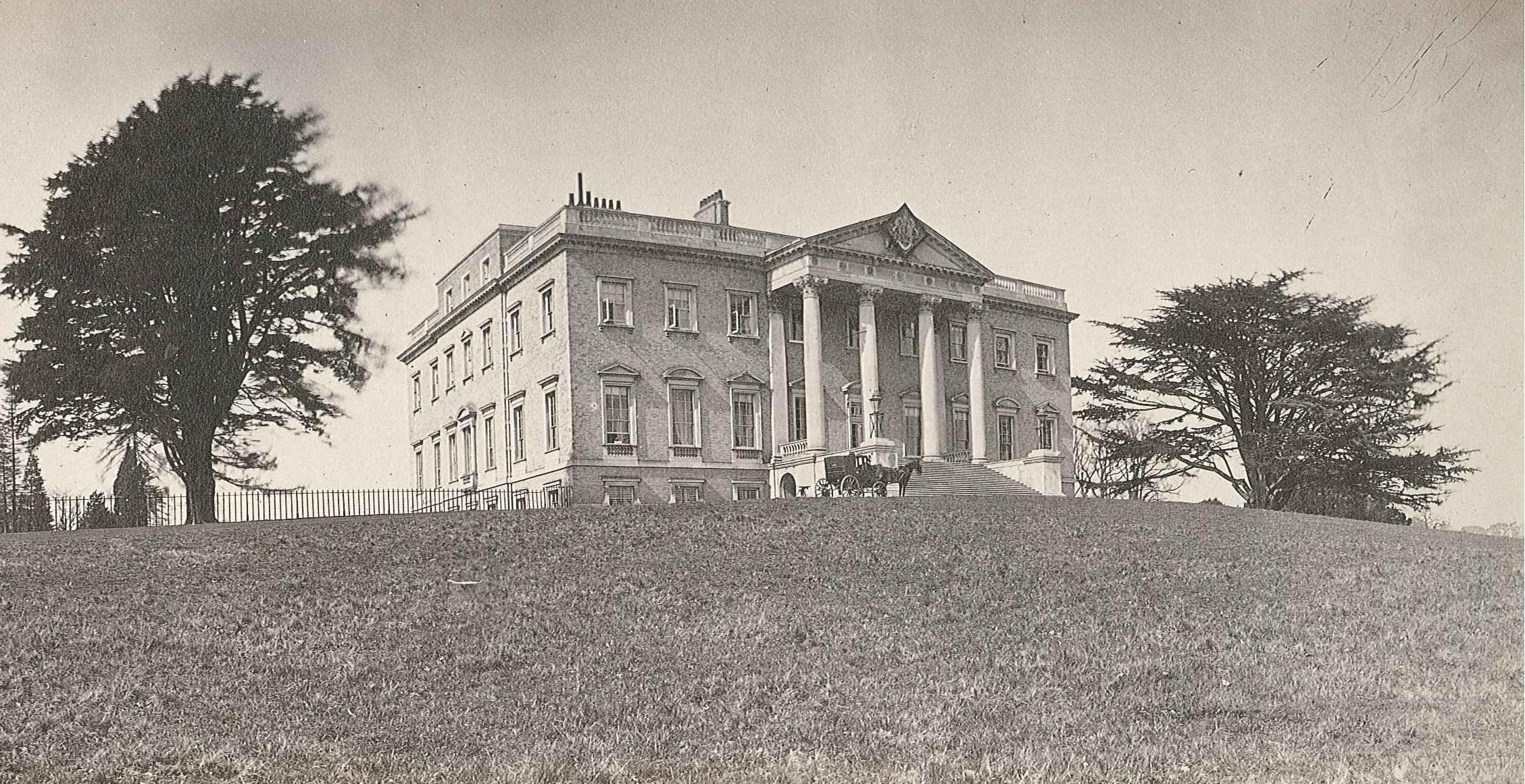
Claremont Mansion in c.1860
 In 1768 Newcastle's widow sold the estate to the super-wealth Robert Clive, Baron Clive of Plassy, who is is said spent £100,000 (about £10,400,000 today) on his new mansion and the grounds.  Clive's Palladian mansion is an interesting example of 'Capability' Brown's work as an architect.  Subsequently it was occupied by Princess Charlotte (daughter of George IV) upon her marriage to Leopold of Saxe-Coburg.   It was also favourite of the young Queen Victoria, who celebrated many of her birthdays here.  In  the aftermath of the 1848 Revolution Victoria offered the mansion as a refuge to the French King Louis-Philippe and his Queen Marie-Amelie.

The gardens are open from 10am to 6pm, the mansion from 11am to 5pm with guided tours at 11.30am and 3pm

Thursday, 1 March 2012

E is for English Landscape Garden

Brown's landscape at Longleat - more natural than nature
Many thousands of acres of downland Britain that we assume are ‘natural’ were, in fact, parts of carefully designed English landscape gardens created in the 18th and early 19th centuries.  The move away from the formal, French-inspired garden of the late 17th century towards a reappraisal of Nature was stimulated by the Grand Tour, innovative farming techniques, and Enclosure. 

Charles Bridgeman
The first ‘landscapist’ was Charles Bridgeman (d.1738), and his greatest contribution was the introduction of the sunken hedge or ‘ha-ha’.  

A ha-ha
This brought the broader landscape into the garden, which evolved not just as something to look at, but also to look through.  

William Kent
The pace of change was maintained by William Kent (1684-1748) - the subject of an earlier post - who further de-formalised the garden and created idealised, picturesque landscapes - works of art inspirited by the Classics and set within a tamed, sculptured Nature. 

Venus Vale at Rousham
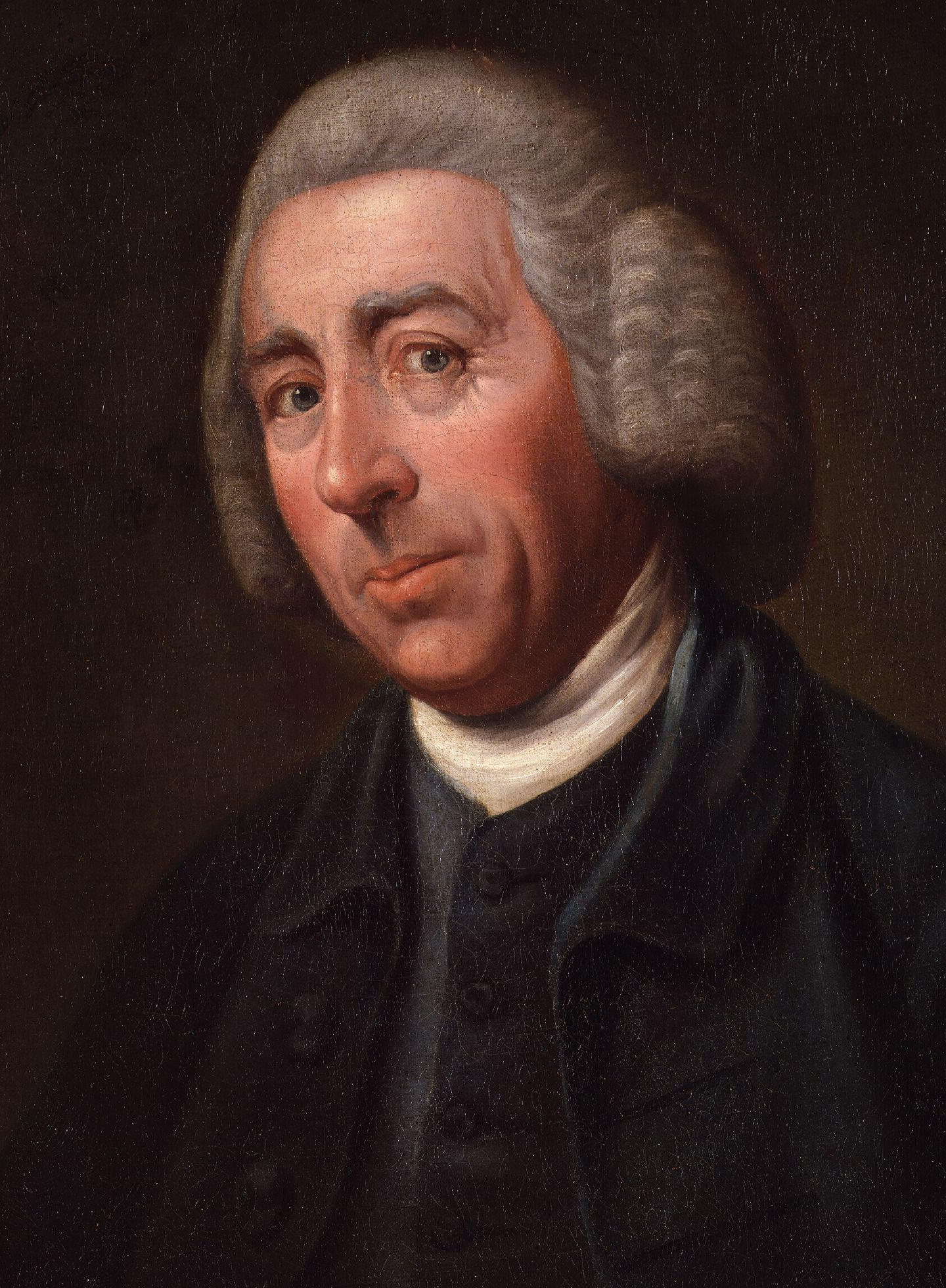
However, it was the much-maligned Lancelot ‘Capability’ Brown (1716-83) who created what has been described as Britain’s greatest contribution to world art. 

Lancelot 'Capability' Brown
His landscapes were wholly English in their character and inspiration, and Sir Horace Walpole perfectly encapsulated Brown’s work: ‘Such was the effect of his genius that when he was the happiest man he will be least remembered, so closely did he copy nature that his works will be mistaken.’  

Blenheim Palace
I also argue that if you apply the maxim ‘form follows function’ Brown was the original Minimalist Modernist - a work of art composed of water, grass, trees and topography that simultaneously turned in a profit as a productive landscape.

Humphry Repton
Brown’s successor was Humphry Repton (1752-1818), who I call 'Practicality' Repton because he combined beauty with utility primarily by reintroducing the terrace, but as Industrial Revolution suburbia rose and gardening for the masses arrived, formality returned to the garden....

Sheringham Hall
If you want to experience these works of art here are some suggestions of gardens to visit.  There is no unadulterated Bridgeman garden extant, although Claremont in Surrey and Chiswick House in London retains elements. The latter was designed in co-operation with Kent with whom Bridgeman worked on several projects

The finest example of Kent’s work is Rousham in Oxfordshire.  Brown’s crowning glory is Blenheim Palace, also in Oxfordshire: and Repton’s ‘darling child’ is Sheringham Hall in Norfolk.

This is a link to a feature on Georgian Gardens.

Tuesday, 14 February 2012

B is for Belvedere

Bramante's Cortile del Belvedere
Literally translating as ‘beautiful view', the belvedere is a garden building positioned to take advantage of a particularly commanding vista over the garden and/or out to the landscape beyond.   With its origins as a defensive turret or look-out position, the belvedere was first used as an ornamental feature in the gardens of the Italian Renaissance.  A particularly fine example is in the Vatican Gardens, Rome, where the appropriately named Belvedere Court was designed by Donato Bramante for Pope Julius II from c.1505.  

The Gloriette at Schönbrunn
As an intrinsic feature of the Italian Renaissance Garden, the belvedere made its way across Europe.  In Vienna is to be found both the Belvedere Palace and the belvedere at Schönbrunn - although the latterit technically a gloriette - a belvedere on an elevated site.

Schönbrunn from the Gloriette
In Britain, it could be argued that the banqueting houses and buildings placed on top of the Mount, a Tudor innovation, were, in fact, an early form of belvedere since they provided a view out and had evolved from defensive look-outs.  The Renaissance-influenced belvedere became a particularly popular feature of 18th century landscape gardens. 

The Belvedere Tower at Claremont
Generally taking the form of a tower, they both provided an eye-catching feature within the landscape, and gave a stunning view over the surrounding countryside when climbed.  Arguably Sir John Vanbrugh designed the finest example at Claremont.