Friday, 2 August 2013

Notice of a Must-Attend Conference


An International Conference is to be held at the University of Sheffield between Friday 20th and Saturday 21st September 2013 entitled ‘The historiography of landscape design and management: Why is the profession so disengaged?’

This link will take you to the booking page where there is also to be found the Programme under the ‘More Information’ tab.

Fees are £50 for this two-day event, which includes participation, lunches and teas together with a coach trip to Wentworth Castle.


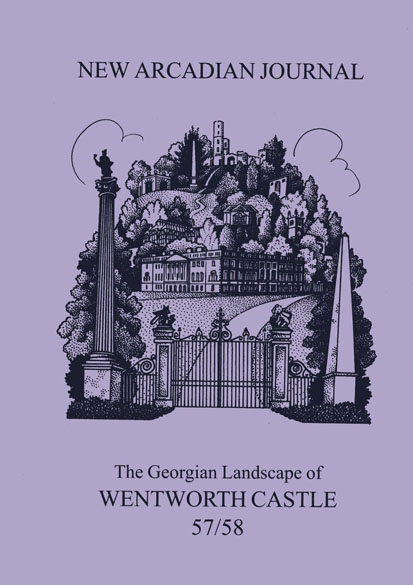
And if you want to swot up before you visit, I can't recommend highly enough The Georgian Landscape of Wentworth Castle published by New Arcadian Press.

Thursday, 1 August 2013

Mughal Gardens of Kashmir


The water channel at Nishat Bagh (Photo: Jan Haenraets, 2011).

Great post from Jill Sinclair on her a landscape lover's blog focusing on the Mughal gardens in Kashmir and the work currently being undertaken to preserve and conserve them.
The remains of the Oont Kadal in Dal Lake at Nishat Bagh (Photo: Jan Haenraets, 2010).
The post features an interview with Dr Jan Haenraets who is working on the conservation work, and who also wrote a fascinating article 'Rediscovering the Mughal Gardens of Kashmir'.

Thursday, 6 June 2013

Judith B. Tankard Lecture


On Saturday 08 June the garden historian Judith B. Tankard will be presenting a lecture at Knoxville Botanical Garden and Arboretum on England’s most famous 20th century gardener and garden designer Gertrude Jekyll. There is more information about the lecture and reservation information here.


Tankard is the author of eight books on American and European landscape and garden history; and her most recent work is Gertrude Jekyll and the Country House Garden.

Friday, 31 May 2013

Garden History Online - A Review


My online garden history course begins tomorrow for its monthly run - and there is still time to sign up.  To give you a flavour of the course, Jean Cornell who took the course last month has written the following review.  The words are wholly her own.  Thank you Jean.

Having completed this course recently, I have been asked to about it. I made the fatal mistake of saying I enjoyed it.

Of course a four-week course can only scratch the surface of this vast subject, and I have numerous things to continue to explore now the course is over.  However it gives you a sound and enthusiastic introduction.

What the course does give is the context of why gardens have played such an important part in people’s lives since time immemorial.  They reflect the culture and philosophy that was important when they were created, and help us understand why gardens continue to give such pleasure.  Perhaps we overlook this today and take it for granted.

The course comprises four seminars – one a week delivered in a video and downloadable transcript.  There is a weekly assignment, which you can use either photographs of gardens included in the seminar or ones of your choosing.  There is a wealth of information to be found on the internet to provide additional information.

I have included illustrations of the gardens I used for my assignments to illustrate the variety of gardens covered.

Painting in an Egyptian tomb (TT217) in the Valley of the Nobles, Deir al-Medina, Thebes
I was fascinated by the Ancient Egyptians obsession with death and Paradise.  Paradise is a theme that runs through many of the early gardens – in Babylon and in Persia, and in Islamic gardens. 

Chahar Bagh-e Shahazadeh, Iran
To this day Islamic gardens are still designed in the way that shows a central pool with four rills flowing from it to show the four rivers of life – water, milk, honey and wine.  Water is another recurring theme in garden design and I was interested to learn how technology for using water both for irrigation and ornamental features developed.


Chateau de Villandry, France
The Italian and French Renaissance gardens show how ideas about gardening evolved to show how nature could be controlled, but were part of their surroundings.  

Croome Court, Worcestershire
 Then we have the ideas of Capability Brown and others whose gardens were “natural” and which today could be thought to be the natural landscape.


York Gate, Leeds, Yorkshire
Finally there are the Victorian ideas of elaborately designed beds filled with annual bedding plants, the reaction to this in the Gertrude Jekyll and Sir Edwin Luytens Arts & Craft gardens, and the gardens of 20th century.  

Nicholson Wall, Sutton Court, Surrey
My reasons for undertaking such a course were twofold.  First, I wanted to see whether I would be able to commit the time to study and submit the assignments.  Second, I wanted an overview of the history of gardens from the Ancient Egyptians to the present day.

Both my objectives were met.  I needed to prove to myself that I had the skill to study again as I am starting an MA in Garden History in May.  However this course caters for anyone with an interest in garden history as you have the freedom to tailor what you do to meet your own needs.  It’s up to you how much you do.

Toby Musgrave exceeded my expectations about what help I could expect.  Apart from the excellent seminars, he is happy to provide you with additional reading and constructive advice.  His enthusiasm comes across throughout the course.

So have I any criticism?  My main one is that submitting the assignment on line is a pain, in particular photographs which have to be uploaded separately from the text and one at a time.  The only time I asked for support, I never got a reply.  There is the opportunity to engage with fellow participants.  On my course, the other participant was conspicuous by her absence.

That said, I hope Toby may do a follow-up course, perhaps to cover the more recent gardens in Europe or elsewhere in the world or the plant hunters and their discoveries.

Tuesday, 12 March 2013

Kitab fi al-adwiyah al-mufradah


Unless your Arabic is up to it the title of this post will mean nothing in and of itself.  But I should like to draw your attention to a fascinating feature from McGill Publications that I just came across while researching early Herbals

The translation of Kitab fi al-adwiyah al-mufradah is 'The Book of Simple Drugs',  it was written in Al-Andalus (Moorish Spain) in the 12th century by Abu Ja’far al-Ghafiq (d.1165).  One of the foremost Arab physicians and scholars of
his time, Abu Ja’far al-Ghafiq drew heavily on the work of earlier Greek botanists including Dioscorides (1st century CE) and Galen (2nd century CE), and earlier fellow Muslim scholars including Abu Hanifah al-Dinawari (d.895), Abu Bakr Muhammad ibn Zakariya al-Razi (d.925), and Ibn Samajun (d.1001). 


The manuscript is unicum - that is to say the only known copy of this work, and  is now housed in the McGill University's Osler Library of the History of Medicine.

The Ghafiqi Project hosted at McGill aims is to produce a three-volume work, a facsimile of the original manuscript, a translation and a collection of scholarly commentary.

Tuesday, 5 March 2013

Spode & Curtis

Cyclamen coum on plate and paper (below)
Thanks to Val Bott for bringing the following to my attention.  Its always interesting to see how different art forms influence each other, in this case botanical illustration on porcelain decoration.  


The post by Pam Woolliscroft author of Spode History tells about the botanical designs employed by Spode in the 19th century and which were inspired by the plates in Curtis's Botanical Magazine.  The magazine was founded by William Curtis in 1787.  Samuel  succeeded to the editorship of the magazine in 1827 selling his rights in 1846. Curtis's Botanical Magazine (1801-1920) is downloadable for free from our good friends at the Biodiversity Heritage Library.

Spode is a Stoke-on-Trent based pottery company that was founded by Josiah Spode (1733-1797) in 1770. Josiah Spode earned renown for perfecting under-glaze blue transfer printing in 1783-1784 – a development that led to the launch in 1816 of Spode’s Blue Italian range which has remained in production ever since.  Josiah Spode is also often credited with developing a successful formula for fine bone china.

A snip at €2,413
A modern example of the same would be Royal Copenhagen's beautiful - but expensive - Flora Danica collection.