Friday, 10 February 2012

Garden History Course at Hadlow College

Just in case you didn't see the comment from thesunking, Hadlow College near Tonbridge in Kent is  running a new garden history course lsting 15 weeks and commencing February 22nd.  The course description states that the it is:

''Designed for those people with an interest in garden design history, this course incorporates some classroom based theory together with visits to a variety of historic gardens.  These visits will bring to life everything which has been learnt in the classroom.  Beginning with the gardens of ancient Egypt, you will look at all the major styles - including Italian renaissance, French baroque and post Abstract - as well as the key players within garden design history.  In addition to an understanding of the key characteristics of each style, students will gain an insight into the political, social or economic factors of the time which were the catalyst for the design.'

Thursday, 9 February 2012

The A to Z of Historic Garden Features

After a brief Twitter discussion this morning with@PatientGarden about the quincunx ("the what?" I hear you cry), Helen has inspired me to begin an A to Z of garden features from garden history to run alongside our walk throuhg gardening time.

So, to begin... A is for Automata

From Les Raisons des forces mouvantes
The word 'automata' in a garden setting is used to describe mechanical figures that move by clockwork, water, or wind power.  A 9th century treatise shows that the Persian garden makers were adept with the principles of leavers, pulleys, hydraulics and siphons, and may have used them in the spectacular 10th century gardens of Baghdad. 

Automata were a favourite feature in Italian Renaissance gardens, and hydraulic engineers developed theories of Classical writers such as Hero, and created water organs that played tunes, as well as figures and animals that moved unexpectedly to the delight of visitors.  

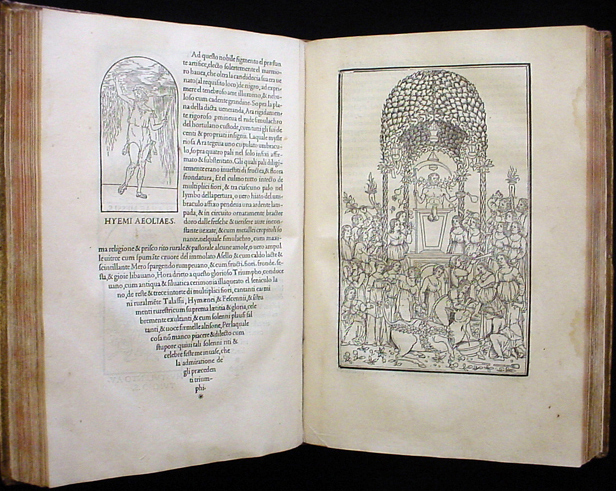
Hypnerotomachia Poliphili
Automata are recorded in Francesco Colonna’s Hypnerotomachia Poliphili (full text) published in 1499, and on a visit to Villa Aldobrandini early in the 17th century, John Evelyn reported seeing ‘singing birds moving and chirping by force of water’ and a copper ball that ‘continually daunces about 3 foote above the pavement, by virtue of a Wind conveyed secretly to a hole beneath it’.


Hortus Palatinus
Salomon de Caus (or de Caux), a French engineer, whose most famous garden was the Hortus Palatinus, or Garden of the Palatinate, attached to Heidelberg Castle, Germany, was fascinated by automata and wrote Les Raisons des forces mouvantes (The Principles of Moving Forces) in 1615.  Salomon brought automata to Britain, where they delighted; but a variation on the theme, giochi d'acqua (jeux d'eau) or 'water jokes' were not so popular.  


The example above is set alongside a path at Villa D'Este in Tivoli and would squirt unsuspecting passers by. Perhaps it was the cool northern climate that prevented luckless visitors from seeing the funny side when soaked by hidden jets that spurted up from the ground or squirted unexpectedly out of fountains!

Garden History Day Classes

Image from CUBG website
Over the coming months Cambridge University Botanic Garden is holding four day classes on garden history.  The first three to presented by Dr Twigs Way, the last by Dr Patrick Harding.  The dates and titles are:

20 April  Artists or architects? Exploring Edwardian garden designers

25 May  From borders to walls, via rose gardens and rills
 
22 June  Art and the Edwardian garden

13 July  Go East young man: the Edwardian love affair 
                for Sino-Himalayan plants
 
The costs are £30 each for the first three and £50 for the last one. 

Tuesday, 7 February 2012

Date for the Diary

Image from WHGT website
On Saturday 28 April the Welsh Historic Gardens Trust is holding a Study Day at the Bodnant Welsh Food Centre entitled ‘Canopied with Bowers - Pergolas, Arbours and Arches’.  Speakers include Linda Farrar and Dr Jan Woudstra.

Cost is WHGT Members £35, non members £40 (Includes coffee and lunch).

Online booking is available here

Mediaeval Gardens

Mary in a hortus conclusus
One of my favourite periods of garden history and one which is sadly neglected is the Mediaeval garden.  If you wish to know more,  John Harvey's Mediaeval Gardens (1981) is a masterful tome.  Albeit an expensive one these days.  There are also a couple of blogs worth visiting: St Mary de Haura and The Medieval Garden Enclosed.

Monastic Self sufficiency

While the Islamic world grew in size and created beautiful gardens, Europe entered a period well deserved of its title, ‘The Dark Ages’.  The peaceful conditions required for ornamental garden making were lost, but the missionary zeal of the monks took Christianity swiftly across Europe, and since their Rule demanded self-sufficiency, with it went the art of gardening.

Plan of St Gall - garden is in top left corner
One 9th century document, a plan by Abbot Hiato of St Gall, a monastery in Switzerland shows a blueprint for the perfect monastery and reveals the garden to be full of raised, rectangular beds in each of which was grown a single crop.  Monsativc gardens were made for utility and purpose - to provide plants to eat, from which to make medicines and to use in the everyday running of a monsatic establishment.  They were not for ornament and repose, and by the late 11th century, the monasteries were large, well established, and powerful

Exotic Secular

Virgin and Child with Saints, c.1510-1520. Attribution: Fir0002/FlagstaffotosGFDL Licence
As a sort of peace settled across Europe, with its return, so did garden making – but protected behind thick castle walls.   Such enclosed gardens were often called hortus conclusus and had a religious overtone referring to Mary.  However unlike monks, the nobility were neither celibate nor ascetic and many had seen the erotic, sensuous Moorish (Islamic) gardens in Spain, Sicily and on the Crusades.  Thus Islamic influences began to creep into the garden.

The Abbey House Garden, Malmesbury

The mediaeval garden mingled beauty with utility.  It was a place for relaxation, and in a malodorous world, a retreat full of sweetly scented plants.  Like the monasteries the plants were grown in raised beds, and many species still served medicinal or culinary uses, but they were grown in a way to make them look beautiful – a mix of species to create a floral tapestry.  Other beds were raised further to make seats, and carpeted with fine turf richly sprinkled with herbs such as thyme, camomile and other fragrant plants.  Alternatively the enclosed space was entirely covered in a ‘flowery mead’ - fine grass studded with many wild flowers.  

Favourite features

Boccaccio’s Teseida
Other popular features included arbours, the simplest being a structure of wooden  poles cloaked with climbers such as honeysuckle, vine or clematis.  More ornate frameworks were made from woven willow or wooden trellis.  This notion of a romantic retreat received a fillip with the story of fair Rosamund Clifford, mistress to the English king, Henry II.  In the grounds of Woodstock (now Blenheim Palace), the King built Rosamund a bower, where they had their trysts, until his jealous wife, Queen Eleanor of Aquitaine learned of their trysts and killed her rival.
  
An Enclosed Garden
Ornate water features, especially tanks, baths, pools, and fountains were another favourite, as were mazes and labyrinths, often copied from patterns on Cathedral floors.  However these were not mazes as we know them – tall yew hedges - instead they were patterns cut into turf.

The Normans loved hunting, and they must have heard tales of the great Assyrian pairadaeza full of exotic animals, trees and flowers.  A ‘replica’ was built in 1123 by Henry I, who enclosed the park at Woodstock and stocked it with animals including lions, leopards, lynx, porcupine and camels. 

P.S.  The links of the above two images lead so some rather interesting, albeit not garden, facts.  Try them if you dare.

Saturday, 4 February 2012

Lilies, Gumboots, Lesbians & the National Trust

Not perhaps words you would immediately associate, unless you were having a particularly arduous time with your therapist.  However, Robin Lane Fox's article in this Saturday's Financial Times, based on his conversation with the National Trust's chairman Sir Simon Jenkins. It makes for interesting reading, especially as Lane Fox manages to get into the piece two mentions of sex!

Garden History is SO Quirky - Love it!


Heres is a blog post from another devotee of garden history.  I just love all the weird, wonderful and interesting things that garden history throws up once you start looking.